Responsible AI adoption for SMEs has never been more urgent. Artificial Intelligence is moving from
experimentation to everyday use. Small and mid-sized businesses are using AI to draft proposals, summarize emails, analyze customer data, and automate routine tasks.
The benefits are clear. AI saves time and increases efficiency.
The risks are less visible.
Many organizations are adopting AI tools without understanding how those tools handle data, where information is stored, or who remains accountable for decisions influenced by AI outputs.
For SMEs, this gap between speed and structure can create serious exposure.
When Convenience Overrides Control
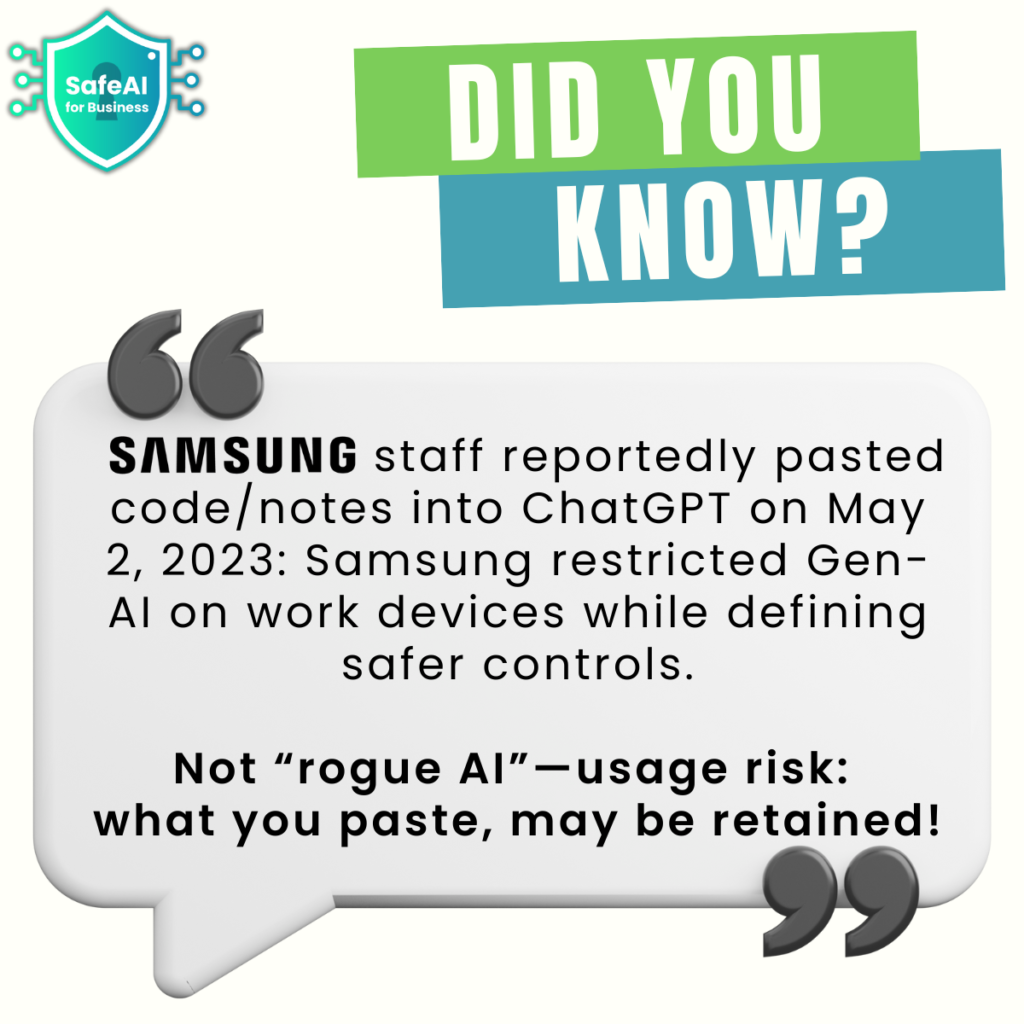
In 2023, a widely reported incident involving Samsung highlighted the practical risks of uncontrolled AI usage. An engineer reportedly entered confidential source code into an AI tool while troubleshooting a problem. The data was stored within the system.
The issue was not sabotage. It was convenience.
This incident demonstrates a simple reality. When employees are under pressure to solve problems quickly, they will use the fastest tool available. Without clear guidance and governance, sensitive information can leave controlled environments without anyone noticing.
If such risks can materialize in a large technology company, smaller organizations without formal oversight are even more exposed.
The Invisible AI Ecosystem Inside Modern Businesses
AI is no longer limited to standalone applications. It is embedded in tools that businesses already use every day.
Customer relationship platforms
Email systems
Accounting software
Design tools
Human resource platforms
A single SME may use multiple AI-enabled systems at the same time. Each may process data differently. Each may have different retention policies. Each may rely on different third-party providers.
This creates a fragmented environment where:
- Data flows are not fully mapped
- Responsibility is unclear
- Oversight is limited
- Risk accumulates silently
In many cases, leaders do not have a complete inventory of where AI is being used across their organization.
5 Steps to Responsible AI Adoption for SMEs
SMEs may not have dedicated compliance departments. That does not mean governance must be complex. What is required is structure and consistency.
1. Create an AI Register
Document every AI tool or workflow in use.
For each tool, record:
- Purpose
- Department using it
- Type of data processed
- Data sensitivity level
- Responsible owner
If a tool is not documented, it cannot be governed.
2. Review Vendor Data Policies Carefully
Do not rely on general privacy statements.
Examine:
- Data retention periods
- Whether inputs are used for model training
- Encryption standards
- Location of data storage
- Involvement of third-party subprocessors
Clear answers should be available before sensitive information is entered into any system.
3. Maintain Human Oversight
AI outputs should support decision-making, not replace accountability.
If AI influences:
- Financial decisions
- Hiring outcomes
- Client communications
- Regulatory reporting
A qualified human should review and approve outcomes before action is taken.
4. Test Before Scaling
Before deploying AI across the organization, test it in a controlled environment.
Evaluate:
- Accuracy
- Data handling practices
- Operational impact
- Potential bias
Adopt widely only after risks are understood.
5. Build Continuous Awareness
AI governance is not a one-time document.
It requires:
- Regular review
- Staff training
- Clear internal policies
- Leadership engagement
Responsible adoption depends on culture as much as technology.
Moving From Speed to Structured Adoption
AI offers significant opportunity for SMEs. It can improve productivity and unlock new capabilities.
However, adoption without structure introduces hidden exposure. Responsible AI adoption for SMEs means moving from speed to structure, with clarity on tools, data and accountability.
Responsible AI governance does not slow innovation. It strengthens it.
When businesses understand what tools they use, how data flows through systems, and who remains accountable, they can move forward with confidence rather than uncertainty.
Free SME AI Starter Pack
To help organizations begin structured adoption, SafeAI for Business provides a practical starter pack that includes:
- AI Register template
- Vendor security checklist
- AI usage policy template
- Payment fraud risk radar
Download the free SME AI Starter Pack below and begin building responsible AI governance in your organization.